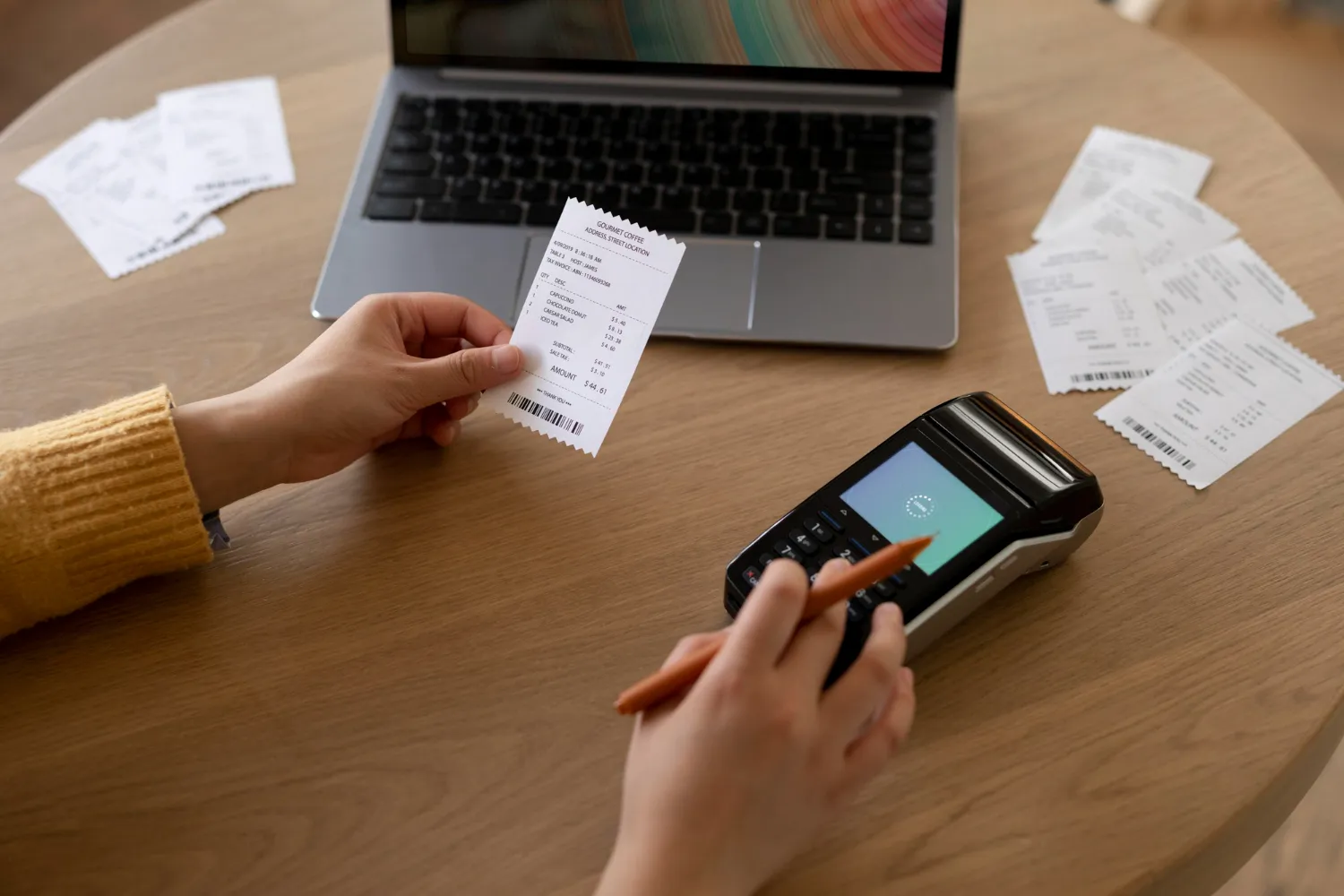
If your store lets customers buy now and pay later, you already know the problem is not trust itself. The problem is relying only on memory, a notebook, and improvisation. A pay later system for retail stores exists to solve that without making the relationship feel cold or overly rigid.
In practice, many small businesses still extend informal credit because it helps them keep serving loyal neighborhood customers. And that makes sense. According to the Federal Reserve Banks' 2024 Report on Payments, roughly four out of five small firms face payment-related challenges, and businesses that collect payment after delivery are more likely to deal with slow-paying customers. The message is clear: delayed payment is still part of how many small businesses operate, but the risk gets bigger when there is no clear control.
At the same time, retail remains a major part of the U.S. economy. According to the U.S. Census Bureau's 2022 Economic Census First Look, retail trade was the largest sector covered by the economic census, with 1.0 million establishments in 2022. And in the Census Bureau's 2022 Annual Retail Trade Survey, U.S. retail sales reached $7.041 trillion in 2022. For businesses operating on tight margins, late payments can hit cash flow fast.
That is why this article gets straight to the point: how to move beyond the notebook, organize pay-later sales in your store, and use that control to sell better instead of making customer relationships harder.
The real problem with tracking pay later in a notebook
Selling on credit without proper control usually does not blow up right away. The problem starts small.
One customer asks you to write down $32, another says they will pay on Friday, and a third pays part of the balance and leaves the rest for later. In the middle of a busy day, you jot it down quickly, tell yourself you will check it later, or worse, keep it all in your head.
That is when the problem starts growing.
When pay-later balances are spread across a notebook, WhatsApp messages, and memory, this is what usually happens:
- You do not know each customer's real balance.
- Credit limits become guesswork.
- Collection happens too late, after your cash flow has already taken the hit.
- The awkwardness shows up on both sides of the counter.
The worst part is that this wears down a relationship that should actually bring both sides closer. The customer thinks they already paid part of the balance, you remember a different amount, and in the end, nobody has the full history in front of them. The result is tension and confusion that slowly eat away at your finances.
Pay-later sales have always had a human side. In neighborhood retail, they are built on trust. But trust without rules turns into risk, and repeated risk turns into lost cash.
What digital pay later is and why it works better
Digital pay later means recording each customer's credit in an app or on a computer, with the amount, date, history, and available credit limit. Instead of writing everything in a random notebook, you connect every sale to a specific customer.
That kind of organization changes how your store runs in very practical ways. Here is the difference.
In a notebook:
- Everything depends on readable handwriting and personal discipline.
- The history is scattered and hard to follow.
- The credit limit is not visible at the time of sale.
- The notebook can get lost, wet, or left in another location.
Digitally:
- The amount is saved inside each customer's record.
- The full history shows up in seconds.
- You can see how much of the limit the customer has already used.
- Payment collection becomes much more organized.
The benefit is not just that your business feels more modern. It is that you gain real structure, and that helps you make better decisions.
There is another important point too: for many people, especially younger customers, seeing everything organized on a phone feels far more reliable than depending on a notebook behind the counter.
When you use a pay later system, you stop depending only on memory to know who pays on time, who usually runs late, and who can safely receive more credit from your store.
How to start using digital pay later in five steps
You do not need to change your whole store overnight. The best path is simple: start with the customers who already buy on credit today.

1. Add the right customers
Start with the people who are already part of your routine, the customers you already know. A name, phone number, and some other identifying detail already helps a lot. In your customer records, the most important thing is having each person's history stored in one place.
That saves you from the classic situation of digging through old chats or trying to remember "whose son that is" just to figure out who owes the balance. You do not have time for that kind of detective work.
2. Set a limit for each customer
Not everyone needs the same credit limit.
A new customer can start with a lower limit. A longtime customer who always pays on time, on the other hand, may earn a higher amount. What matters is having at least a basic rule.
Depending on the size of your store, you could start with something like this:
- New customer: $10 to $20
- Repeat customer who pays on time: $30 to $60
- Customer with a strong payment history and a higher average purchase amount: more than that, based on your business reality
These numbers are not a formula. They are only a starting point. What matters is having a clear standard.
3. Record the credit sale on the spot
The most common mistake among retailers who sell on credit is putting off the record for later.
If the sale happened, it needs to go into the app right away. If you already use a mobile POS system, this is even easier because the sale is already organized from the start and many steps happen automatically.
That habit changes everything. The customer understands that there is a clear agreement, and you do not have to rebuild the whole transaction later.

4. Track due dates and payment history
Pay-later sales without follow-up turn into a surprise at the end of the month.
When the full history is centralized in one system, you can see:
- Who is close to their limit
- Who has paid late more than once
- Who usually pays quickly
- Who has gone too long without settling up
That is the point where pay later stops being an informal favor and becomes a controlled, strategic routine.
5. Create a simple collection routine
Organized collection does not have to be harsh. It should be polite and predictable.
Choose one day a week to review due dates and send a reminder before the payment date. If your store already sells through WhatsApp, it makes sense use that same channel to follow up on payments professionally.
A short and straightforward message is often enough:
Hi, Paula. Just a quick reminder that your $15 pay-later balance is due tomorrow. If you need anything, message me here.
It is short, respectful, and clear.
How to set limits without guessing

This is where many store owners get stuck. To be nice or close the sale, they end up giving high limits to people they do not really know yet. Or they leave credit wide open for customers who have already paid late several times, which is even worse.
The safest path is to look at each customer's behavior instead of making decisions based only on personal feelings.
Split customers into three groups:
New customer
They still have no track record in your store. Here, the best move is to start low. If they pay on time two or three times, then you can increase the limit.
Repeat customer
They have been buying from you for a while, they reply to messages, and they usually settle up without excuses. This customer can have a higher limit because they have already shown that they follow through.
Customer with frequent late payments
This situation is uncomfortable, but it needs to be evaluated calmly. It makes no sense to keep the same limit for someone who does not pay on time and keeps creating stress for your business.
In those cases, the best move is to reduce the limit, pause it temporarily, or ask for payment before approving a new credit sale.
One important sign is when the customer uses almost all of the available limit and takes too long to free it up again. Another warning sign is when the old balance starts stacking on top of the new one. That is how a snowball starts.
Healthy pay-later sales need two things happening at the same time:
- trust
- clear boundaries
Without the first one, the relationship weakens. Without the second, trust wears out fast.
How to collect without losing the customer

Collecting the wrong way can damage the relationship. At the same time, not collecting at all hurts your cash flow.
The real secret is balance.
Remind customers before the due date
That helps prevent simple forgetfulness and avoids that last-minute pressure. A reminder one or two days earlier already improves your chances of getting paid.
Be clear
Vague messages create excuses and leave room for delay. State the amount, the date, and leave space for a reply.
For example:
Hi, Carlos. Your $25 pay-later balance is due this Friday. If you prefer, I can split it into installments. Let me know here.
Negotiate when it makes sense
If the customer is loyal and reliable but had a tight month, it is worth negotiating. The goal is not to punish them for paying late, but to get paid without damaging a relationship that can still generate future sales.
Avoid the most common mistakes
When store owners are in a rush to collect or solve the issue quickly, they often get tangled up in a few common mistakes:
- Asking for payment in front of other people
- Adding fees or interest without explaining and agreeing to them first
- Approving new credit for someone who is already late without clear limits
- Waiting too long to bring up the unpaid balance
Professional collection in a small retail business does not mean being cold. It just means being respectful and consistent.

Digital pay later also helps build loyalty
This is the part many people overlook.
When you organize pay-later sales, you are not just protecting yourself. You are showing the customer that the relationship is built on consistency, history, and clear standards, which rewards the people who pay on time.
Picture two stores. In the first one, nobody really knows how much each person owes. The limit changes depending on the mood of the day, and payment follow-up only happens after the balance has already become uncomfortable. In the second one, the customer knows there is a clear agreement. People who pay on time keep their limit, and those who pay late talk it through and renegotiate.
Which store feels more trustworthy to you?
Digital pay later does not remove the human side of the relationship. It protects that side without leaving your store's cash flow exposed. It also gives you room to make better decisions:
- offer more credit to the customers who have earned it
- contain risk before it turns into a loss
- recover good loyal customers through simple negotiation
- use payment history to sell with more confidence
Here is a common example.
Marisa owns an accessories store and serves many repeat customers. Before, she wrote everything in a small notebook. When a customer came back after a few weeks, she did not know whether there was still an open balance, how much had already been paid, or whether that new purchase still fit inside the credit limit.
After she started tracking pay later by customer, the conversation changed. Her best customers got clear limits, and the ones who paid late started receiving reminders before the due date. The tension dropped because the payment history replaced guesswork and memory.
This kind of organization does not perform miracles, but it does prevent the avoidable losses that weigh heavily at the end of the month.
When it is worth leaving the notebook behind for good

If any of these situations has already become routine in your business, the switch makes sense:
- You forget to record some credit sales
- You need to open several conversations just to follow up on payments
- You have already argued about amounts because nobody remembered the original agreement
- You do not know your total open pay-later balance
- You have good customers, but you cannot clearly tell who deserves a higher limit
The point is not to abandon a neighborhood habit. The point is to give it enough structure so it keeps working for both you and your customers.
How Kyte fits into this routine
In the Kyte app, you can organize customer records, sales, and a pay later system on the same phone you already use in your store. That helps take credit sales out of improvisation and turn your operation into a much more organized process.
In practice, the path looks like this:
- add the customer
- record the sale right away
- track the outstanding balance
- collect through the channel you already use, like WhatsApp or SMS
If your store is already profitable and the challenge now is getting more organized, it is worth taking a look at Kyte pricing to understand how this routine can work without depending on a notebook.
Frequently asked questions about digital pay later for retail stores
How do I start tracking pay-later sales in my store?
Start by adding the customers who already buy on credit, setting an initial limit, and recording each sale when it happens. The most important thing is to stop putting off the recordkeeping.
Does digital pay later replace the trust-based relationship with the customer?
No. It organizes that relationship. You still offer credit, but now you do it with clear records, defined limits, and real payment history behind it.
Can I set a different limit for each customer?
Yes, and you should. New customers require more caution, while customers who always pay on time can earn a higher limit. Ideally, you should adjust limits based on each person's behavior.
How do I collect without making the customer uncomfortable?
Use a short, polite message ahead of time. State the amount and the due date clearly. If the conversation becomes difficult, negotiate objectively without embarrassing the customer.
Is it still worth selling on credit today?
In many neighborhoods, yes. What is not worth it is selling on credit without control. When there is a clear limit, a proper record, and an organized collection routine, pay-later sales can still be a strong competitive advantage.