Many stores ask the wrong question. Instead of asking "which one is better?" they ask "which one is more modern?" That already skews the comparison. When someone says a mobile POS replaces a card reader, they are usually mixing up two different jobs: taking the payment and organizing the sale.
A card reader was built to capture payment. A mobile POS was built to organize the sales operation. In some cases, one really can replace the other. In other cases, it cannot. The only thing that changes is where the confusion ends up.
That distinction matters even more now because the way people pay has changed fast.
According to the Federal Reserve's 2022 triennial payments study, cards were used most frequently in U.S. noncash payments and accounted for 84% of the increase in the number of payment transactions from 2018 to 2021. At the same time, the Federal Reserve's 2023 interchange report says card-not-present debit transactions reached 34.4% of total volume in 2023, which also means card-present payments still represented most debit transaction volume. The point is simple: payment behavior is evolving, but the physical card has not disappeared.
So the short answer is this:
- yes, a mobile POS can replace a card reader in some scenarios
- no, it does not automatically replace every in-person payment need
What decides that is not hype. It is your store's daily routine.
What a card reader actually solves
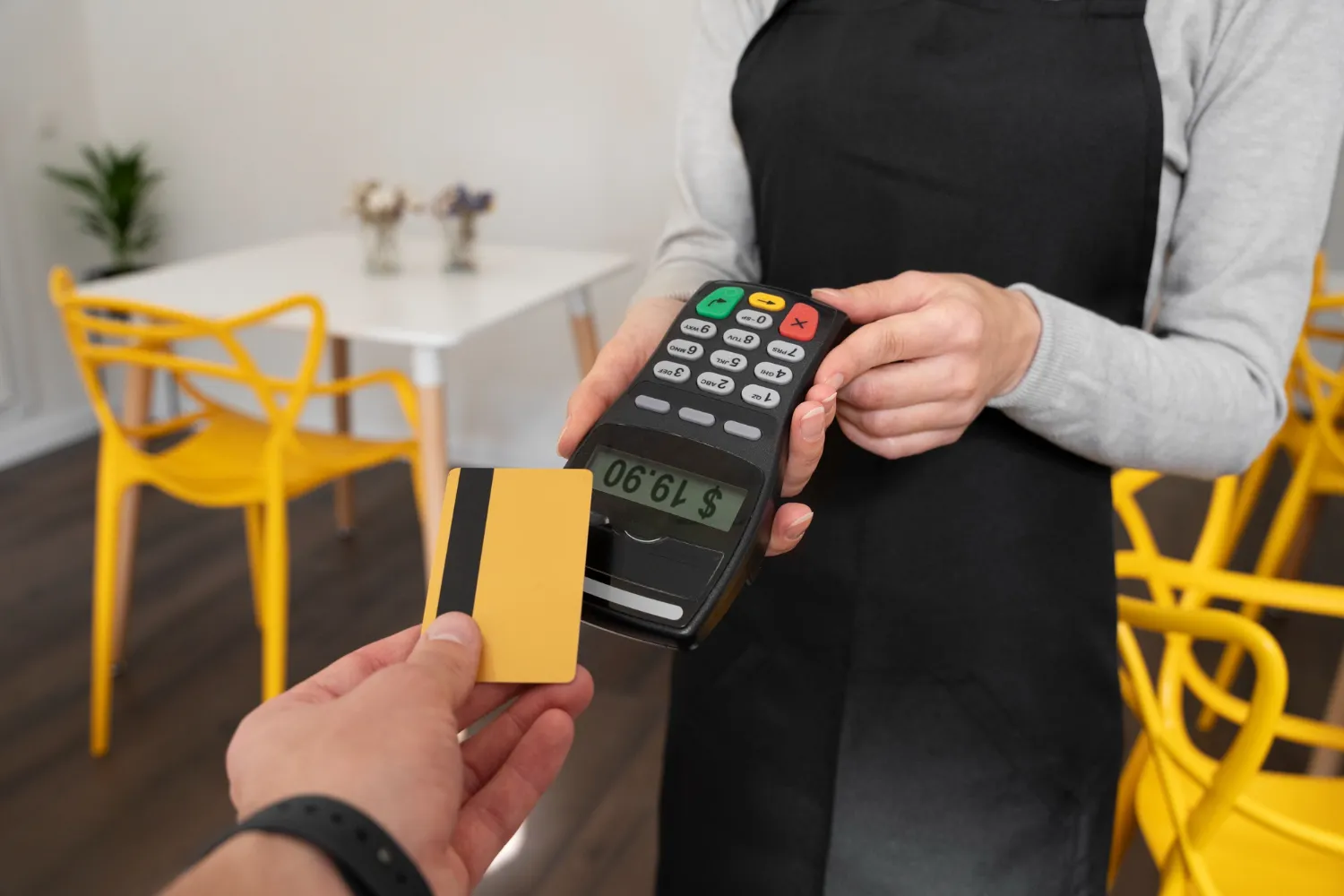
A card reader solves one very important part of the sale: the moment when the customer pays with a physical card.
It is strong when the scene looks like this:
- customer at the counter
- card in hand
- everyone in a hurry to finish
- in-person debit or credit payment
In that moment, the card reader delivers something very specific: fast payment capture. That is still relevant because plenty of customers still want to tap, insert, or enter their PIN right there.
The problem starts when the store expects the card reader to do things it never promised to do.
It does not organize inventory by itself.
It does not create useful customer history.
It does not turn payment into an operational view of the business.
It only records that money came in. But that is not the same as organizing the sale.
That is why many stores think they are under control because they take card payments every day, but at the end of the month they still do not know:
- which product sold the most
- which employee closed the most orders
- which customer came back
- which item left without the right inventory update
- how much money came in by channel
What a mobile POS actually solves
A mobile POS system solves a different layer of the routine.
It helps you record the sale, issue a receipt, save the customer, update inventory, and track cash flow on the device already in your hand.
In practice, that changes the day-to-day because the sale stops being just a charge and starts becoming organized information.
With a mobile POS, you can:
- record the item sold on the spot
- apply discounts more clearly
- issue an online or printed receipt
- connect the sale to the right customer
- update inventory control
- see sales history inside your sales control
That is what many people mean when they say "replace the card reader," but technically it is not the same thing.
What the POS replaces first is improvisation. Then, depending on the payment method being used, it may also replace the separate device.
When a mobile POS replaces a card reader
Now it makes sense to talk about replacement.
A mobile POS can replace a card reader when the sale no longer depends on the physical card as the center of the operation.
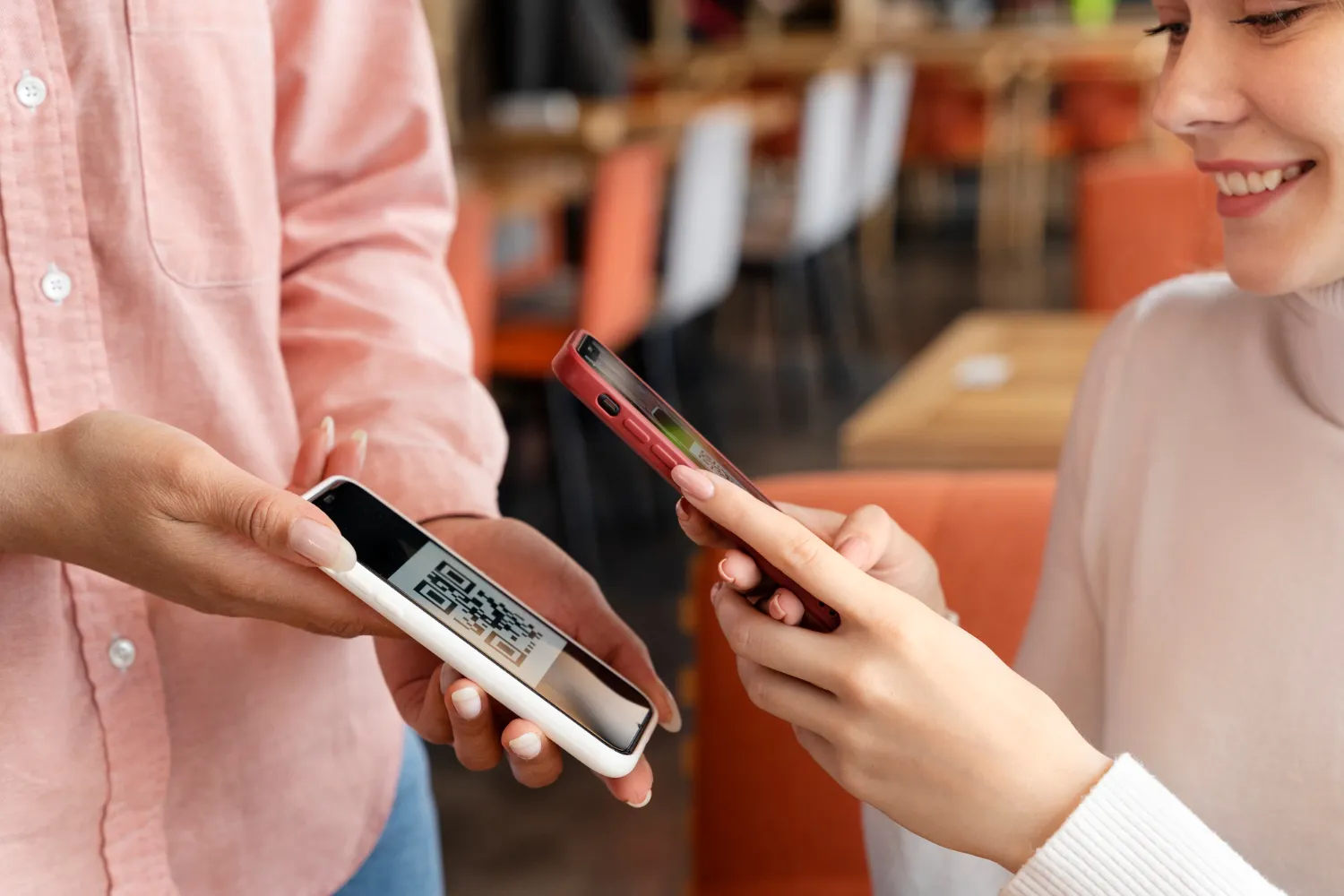
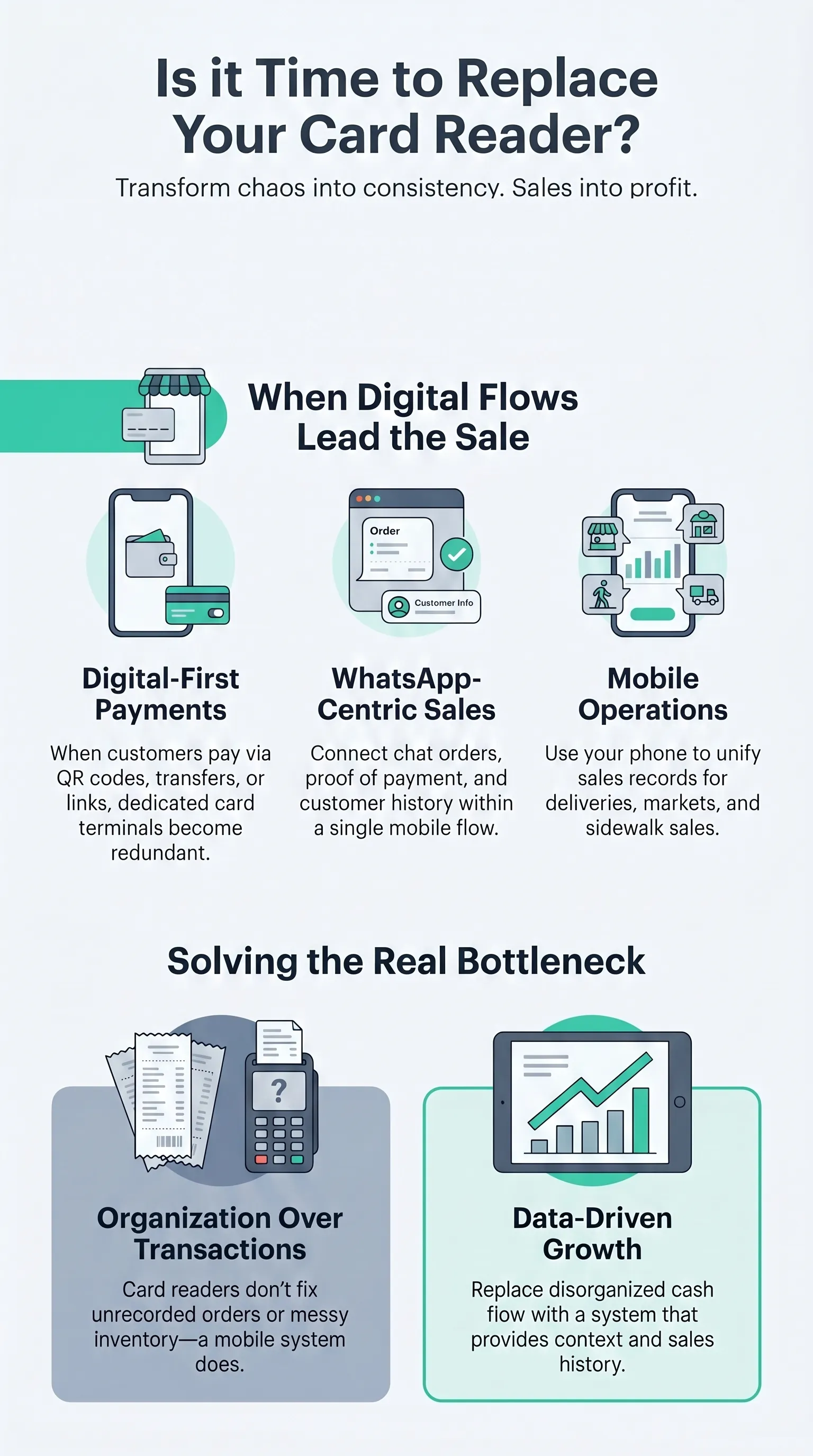
1. When the customer pays by instant transfer, QR code, or wallet
If a large share of payments in your store already happens through bank transfer, QR code, digital wallet, or payment link, the need for a separate card terminal drops a lot.
The Federal Reserve's FedNow launch announcement highlights the growing role of instant payments in giving consumers and businesses faster access to funds and more just-in-time payment flexibility. If the customer pays through a link, wallet, or transfer, the money can come in without depending on a dedicated terminal.
2. When the sale starts and ends in WhatsApp
This is one of the clearest cases.
If the order comes in through chat, the customer chooses the product there, and completes the payment through a transfer or link, what you need most is not a card reader. You need a flow that connects WhatsApp sales, the order, proof of payment, and customer history.
Meta reinforced that direction when it announced new business tools for WhatsApp. If the payment flow is already happening there or alongside it, the card reader stops being the central piece.
3. When the operation is mobile
Markets, deliveries, sidewalk sales, service away from the counter, or a small shop where the owner is moving around all day.
In those settings, the phone wins because it concentrates operations, sales records, and receipts in one place.
If the payment method fits that routine, the phone can handle the main role well.
4. When the real problem was never payment
Some stores already take payments just fine, but still stay disorganized.
In those cases, changing or keeping the card reader does not address the real issue. The bottleneck is:
- unrecorded orders
- outdated inventory
- cash flow without context
- sales with no history
That is where the mobile POS solves more than the card reader ever did.
When a card reader still matters
It would be wrong to say the card reader is over. It still matters when your customer's payment behavior continues to lean heavily on physical cards.
1. When the counter moves fast with debit and credit
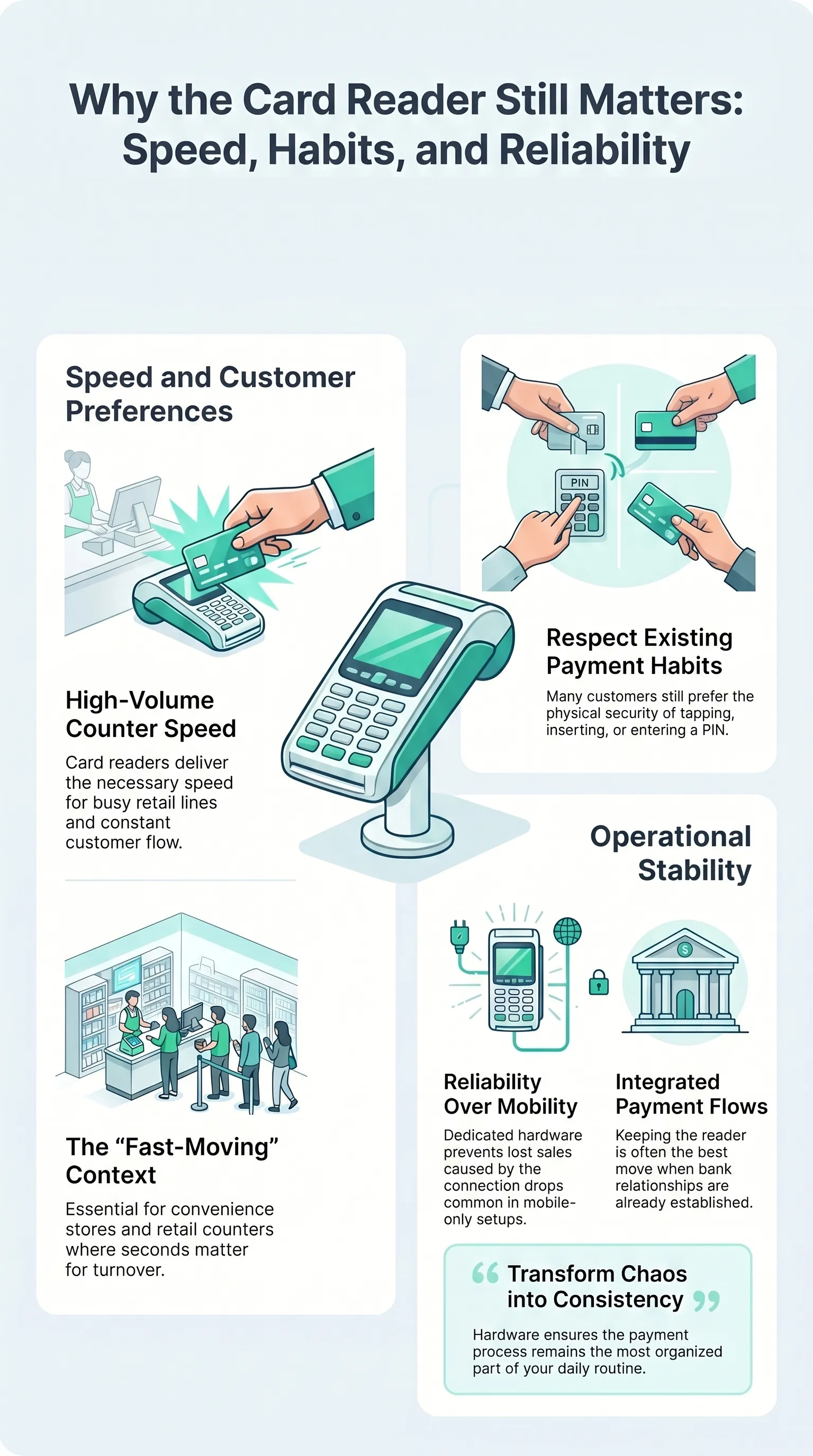
Convenience stores, busy retail counters, lines moving constantly, and customers who are used to pulling out a card and finishing in seconds. Here, the card reader still delivers the speed you need.
2. When the customer wants to tap, insert, or enter a PIN
Card-present payment is still a major part of retail behavior. If that is your reality, there is no point pretending every customer will switch to transfers or wallets just because the store wants a simpler setup.
3. When your payment setup already depends on it
In some operations, the bank relationship or payment flow is already built around the card reader. In those cases, the best move may not be to remove the device, but to stop letting it be the only organized part of your routine.
4. When reliable payment capture matters more than mobility
Discussions in small-business forums show that clearly. Some people want more freedom to operate without a dedicated reader, but there are also reports of lost sales when hardware disconnects during temporary or mobile setups. That reinforces a simple point: full replacement only makes sense when your context can handle it.
The most common mistake in this comparison
The most common mistake is thinking a payment method solves management.
It does not.
A store can have the best card reader in the world and still be a mess. It can take credit, debit, tap-to-pay, and installment payments and still:
- get inventory wrong
- lose customer history
- fail to see where sales came from
- close the register based on guesses
At the same time, a store can have a great app and still frustrate customers if it insists everyone should pay the way the business prefers instead of the way customers actually pay.
The real maturity point is separating the questions:
- How does my customer prefer to pay?
- How does my store need to organize the sale?
Once you answer those, the comparison becomes much more honest.
There is also a second, quieter mistake: confusing "getting paid" with "closing the sale."
Getting paid is one step.
Actually closing the sale means finishing that interaction with everything clear:
- the right item
- the right amount
- the right payment
- the right inventory update
- the right receipt
- the history saved
When a store gets paid but does not record the sale, it is still vulnerable. The money came in, but the operation is still blind.
How to decide in your business
If you want to decide between keeping only a card reader, moving to the phone, or using both, start with these questions.
Do your customers pay more often with transfers, wallets, or physical cards?
If instant digital payments already dominate, the room for the phone to replace the terminal gets much bigger.
Is your bigger problem taking payment or organizing the sale?
If you take payments well but do not control the sale, POS should be the priority.
Does your operation happen mostly at the counter or outside of it?
The more mobile the routine, the more sense it makes to use the phone.
Do you need history, inventory, and receipts in the same flow?
If you do, the card reader alone does not cover what you need.
Does your team need to record sales from anywhere?
If yes, the phone is usually more flexible than depending on a single terminal.
The current logic is to integrate transfers, cards, digital wallets, and QR codes into the same point of sale, not to blindly pick only one format.
By type of operation, the answer changes
Not every store needs the same combination.
Counter-based store with lots of card payments
If most of your sales happen in person and customers often pay with physical cards, the card reader is still strong. The gain here comes from adding a mobile POS so the sale becomes visible inside the operation.
Store that sells heavily through WhatsApp
If the order starts in the chat and ends with a transfer, payment link, or digital confirmation, the mobile POS usually solves much more than the card reader. The bigger need is organizing the process.
Hybrid store
In many small businesses, this is the real situation. Part of the traffic comes in at the counter, another part comes in through WhatsApp. In that scenario, the combination is usually smarter than a radical replacement.
Small store with a solo owner
When one person handles service, sales, payment, and restocking, the most important device is usually the one that holds the most context. That is why the phone often becomes the center of the operation, and the card reader becomes an accessory depending on how customers pay.
Real example: when the phone replaces the device and when it does not
Think about two scenarios.
Store A
An accessories store sells heavily through WhatsApp and receives most payments through instant transfer. The owner needs to record the order, issue proof of sale, follow inventory, and know who bought what.
In that case, a mobile POS solves much more than insisting on a separate card reader as the center of the operation. The separate device stops being essential.
Store B
A neighborhood store with a busy counter serves a steady line of customers who keep paying with physical cards. In-person debit and credit volume is still high.
Here, the card reader is still useful. But that does not mean it should handle all of the business management. The best setup may be card reader for payments and mobile POS for management.
That is why the right question is not "which one is better?" The right question is: which part of the sale are you trying to organize?
If your store already sells well and what is missing now is better visibility into orders, inventory, receipts, and customers in the same flow, it is worth looking at the Kyte app and the mobile POS system. That is where the sale stops being just a transaction and starts becoming a real operation.
Frequently asked questions
Is a mobile POS the same thing as a card reader?
No. A card reader takes the payment. A mobile POS helps manage sales, inventory, receipts, customer information, and cash flow.
Can a mobile POS replace a card reader?
Yes, when your operation depends more on instant and digital payments and less on physical cards.
When is a card reader still worth it?
When your customer still pays a lot with physical cards, especially at a fast-moving counter with frequent debit and credit use.
What is better for a small store?
It depends on your payment mix and your biggest bottleneck. If control is the issue, POS matters more. If the issue is capturing physical card payments on the spot, the card reader is still relevant.
Can I use both at the same time?
Yes. In many businesses, that is the most realistic combination: card reader for some payments and mobile POS to organize the entire sale.