Juliana runs a neighborhood cosmetics store. She sells at the counter, answers customers on WhatsApp, and still puts together last-minute gift kits when someone messages in a rush. On a normal day, one customer asks whether the lipstick in shade 04 is still in stock. Another wants to know which foundation works for oily skin. A third asks for the catalog link. At the same time, an in-store sale comes in and someone has to remember to deduct the right product.
Juliana has customers. What she is missing is a system.
Anyone searching for a system for a cosmetics store is almost never looking for technology just for the sake of it. They are looking for an organized routine. They want to stop improvising their customer service, understand what sold the most, and keep colors, shades, fragrances, inventory, orders, and customer history organized without opening five different apps.
That is why it makes more sense to choose an app with six essential functions than a bloated system full of modules nobody uses. That is where a real system for a cosmetics store starts making a practical difference.
What a cosmetics store actually needs to control
Cosmetics look simple to anyone watching from the outside. In practice, this kind of store has its own complications.
First, variations matter a lot. It is not enough to register "liquid foundation." You need to track color, shade, finish, size, or fragrance. When the team goes right back to handling everything manually and answers everything from memory.
Second, visuals sell. Much of the buying decision is visual: the customer wants to see the shade, the kit, the combination, and the product ready to buy. That is why a digital catalog matters more here than it does in many other retail segments.
Third, repeat purchase is part of the business. Mascara runs out. Foundation runs out. Sunscreen runs out. Cream runs out. If your system does not help you remember who bought what, when they bought it, and what they usually come back for, you restart every sale from zero.
Fourth, promotions create chaos very quickly. A new product line, a gift combo, a weekend discount, a free item above a certain order value... If pricing, inventory, and orders do not speak to each other, confusion shows up the same day.
That is why a system for a makeup or cosmetics store is valuable because of the routine it can actually support than for the nice-looking copy on its landing page.

The 6 things a cosmetics store system needs to have
1. Product registration with variations
This is where everything begins. When product registration starts out wrong, the rest of the operation gets distorted with it.
A cosmetics store needs to register:
- color
- shade
- fragrance
- size
- finish type
If you sell foundation, for example, it is not enough to register only the name of the product line. The team needs to know which shade is still available, which one is sold out, and which one the customer asked for last time.
The same applies to lipsticks, concealers, serums, skincare kits, or perfumes.
Good product registration cuts repeated questions, reduces service errors, and avoids the classic situation where the customer asked for one product and the store set aside a similar but different one.
In cosmetics, every detail directly affects the sale.
2. Inventory control that follows real sales
Every store talks about inventory. In cosmetics, this matters even more.
The reason is simple: a lot of items move fast, many products come with variations, and many of them look similar when someone is rushing.
Without inventory control, the outcomes are predictable:
- the store sells a shade that is already gone
- the team promises a gift kit without checking whether all items are available
- a promotion speeds up sales and no one notices in time
- the owner reorders blindly
Worse than that, the store takes too long to notice which item keeps running out and which one is just sitting there taking up space.
A good system for a cosmetics store has to register the right sale and deduct the right item. That is the foundation of the operation.
3. A digital catalog that replaces scattered photos
Cosmetics stores rely heavily on fast customer service through WhatsApp and Instagram. If every sale depends on sending photos one by one, the operation does not scale, even for a small team.
That is where the digital catalog comes in.
Instead of answering every customer with loose images, you send one organized catalog link with photos, product names, prices, and descriptions. That shortens the conversation and makes the store look more professional.
It also helps the customer move forward on their own through part of the buying process.
A cosmetics store can sell better with a digital catalog that highlights:
- gift kits
- best-selling items
- routine-based skincare
- new arrivals of the week
That works much better than turning the entire shelf into a cold, generic list.
If your team still spends the day sending loose photos and answering "which color do you want?", this part of the checklist is already a necessity.
4. Order management so WhatsApp stops being chaos
In many cosmetics stores, the order starts in chat and dies in chat.
The customer asks, chooses, confirms, and sends the address. Then the team goes looking for a note, separates the product, checks the payment status, and tries to remember whether that order was already entered into the system or not.
That kind of flow wears the owner out and opens the door to basic mistakes.
That is why the app needs order control. Without it, the system becomes little more than a storefront and a product registry.
An order needs to enter the business as an order, not remain buried in a conversation.
When the flow is registered, you know:
- what came in
- what was already separated
- what was delivered
- what is still pending
For a makeup or cosmetics store, this matters because many sales happen on impulse or under tight timing. If the order gets lost, the customer moves on and buys elsewhere.
5. Customer registration and history
Cosmetics live on repeat purchases.
There is the customer who buys the same serum every month, the one who always orders a gift kit around special dates, the one who only buys makeup when there is a launch, the one who likes sweet fragrances...
Without history, the store wastes valuable information.
With customer management, the sale stops being generic and starts carrying context.
You know:
- who already bought
- what they bought
- when they bought
- when they usually come back
This matters a lot because customer retention in cosmetics does not depend only on friendliness. It depends on remembering the customer, their preferences, and the right moment to reach out again.
When the system does not store that, the store has to depend on the team's memory. And memory fails.
6. Simple reports that show what really sells
The last item may look less important. Usually, it only starts to matter after the store is tired of making decisions in the dark.
But that is exactly why it prevents restocking mistakes and impulse purchasing.
A cosmetics store needs to see clearly:
- which products move fastest
- which variations sell more
- which items sit still
- which kits perform well
- when it makes sense to reorder
The reports do not need to be complicated. They just need to be readable.
If the system shows everything but you cannot understand any of it, it does not help.
Good reporting for small retail answers practical questions. "What sold most this week?" "What is running low?" "What did I overbuy?" "Which product sells but gives me poor margin?"
Without that, the owner buys based on instinct, which is usually an expensive way to run a store.

What changes when these 6 pieces work together
Separately, these features already help. When they work together, they change the routine and make inventory and sales control much more reliable. Product registration organizes the item, inventory avoids wrong promises, the catalog shortens customer service, the order enters a proper flow, the system builds a customer history, and the report shows what to do next.
In practice, that means less rework, fewer repeated conversations, and fewer improvised sales.
A cosmetics store that still depends on team memory to remember shades, inventory, orders, and loyal customers loses time at every stage. When the app brings these pieces together, the operation becomes lighter and the sale becomes more professional.
That is where the most important change shows up: you stop running the store in the dark and start seeing the business more clearly.
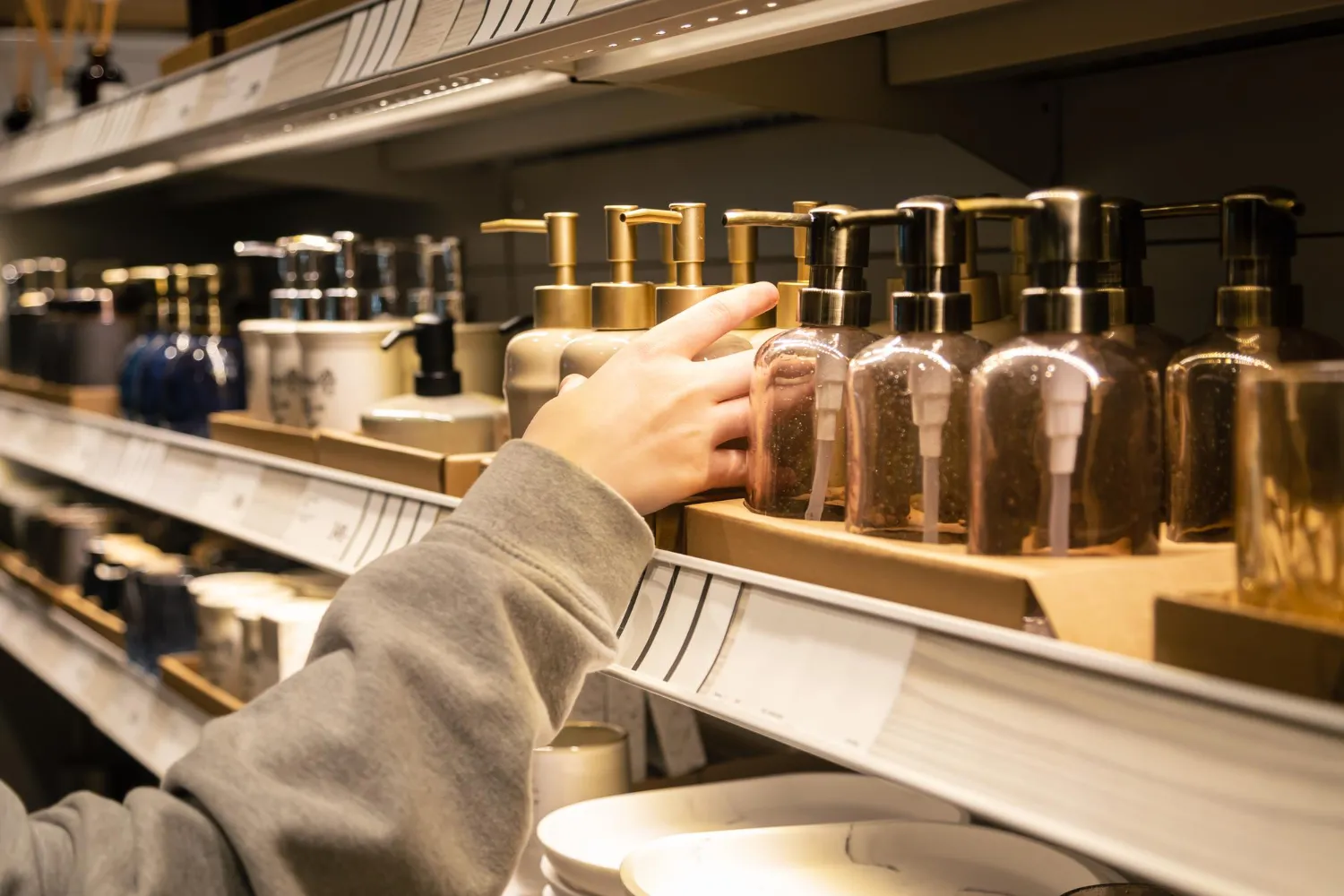
Which of these 6 matters most at each store stage
Not every cosmetics store needs to develop all six areas at the same time.
If the store is still disorganized in the basics
The most urgent items are:
- product registration
- inventory control
- order management
Without those, everything else may look nice, but it stays fragile.
If the store already sells well through WhatsApp
The features that matter most are:
- digital catalog
- order management
- customer registration
At this stage, the gain comes from reducing repeated conversations and getting more value from repeat purchases.
If the store already has a team or higher volume
The most decisive features are usually:
- inventory control
- customer history
- reporting
At that point, the owner needs to stop holding everything in their own head.

How to test whether a cosmetics store system fits your routine
Before paying for any system for a cosmetics store, it is worth doing a simple test based on your routine, not the marketing page.
Ask five questions:
- can I register a product with color, shade, or variation without hacks?
- can I sell at the counter and through WhatsApp without losing control?
- can I send a catalog without depending on loose photos?
- can I see who has purchased and who tends to buy again?
- can I see what sold most without opening a spreadsheet?
If the answer is "kind of" to several of them, the system will probably create more work than relief. It is a simple way to separate a beautiful page from a useful tool.
Another good test is to think about a peak day.
Picture a Friday with a promotion, a new product line launch, and a busy sales floor. A WhatsApp order comes in, one customer wants a gift kit, another wants to know whether the blush comes in two shades, and a salesperson closes an in-store sale. That is the moment when the app has to prove its value.
If it cannot handle that scenario, it will not support your real store. It will work better in the demo than in everyday life.
A cosmetics store needs a system that can handle:
- variations
- fast movement of small items
- image-driven sales
- repeat purchases
- simultaneous service
If an app fails on two or three of those points, the price may look good, but the operational cost later will be high.
Conclusion
Anyone looking for a system for a cosmetics store is looking for operational relief. They want to stop getting lost between shades, inventory, orders, catalogs, and customer records. They want to serve customers better without becoming hostage to WhatsApp. They want to sell with more organization and less rework.
That is why, before paying attention to generic promises, it is worth checking whether the app delivers these six things:
- product registration with variations
- inventory control
- digital catalog
- order management
- customer history
- simple reports
When those pieces work together, the store stops improvising and starts operating with more clarity.
Kyte brings together a digital catalog, inventory control, order flow, customer management, and product registration in the same workflow. For a cosmetics store, that means less mess and more visibility into what actually sells.
Frequently asked questions
What is the best system for a small cosmetics store?
The best one is the one that solves your real workflow. If you sell at the counter and on WhatsApp, you need product registration, inventory, orders, catalog, and customer data in the same place. A system with too many modules and too little routine creates more weight than help.
Does a makeup store really need inventory control?
Yes, especially when there are shades, tones, fragrances, and promotions involved. Without organized inventory, the store sells the wrong thing, makes poor restocking decisions, and finds out too late what has already run out.
Does a digital catalog really make a difference for cosmetics?
Absolutely. Cosmetics sell through image, combination, and convenience. The catalog reduces the need to send individual photos, shortens conversations, and creates a more professional impression.
Can customer management and repeat-purchase history be kept in the same app?
Yes, and that is one of the most valuable parts for this segment. In cosmetics, repeat purchases matter a lot. Without history, you lose context and talk to everyone as if it were their first purchase.
Can I manage my cosmetics store only from my phone?
For many small stores, yes. The most important thing is having the right flow inside the same app.